Brass Decorative Parts: The Complete Guide to Specification, Manufacturing, and Applications in Modern Design
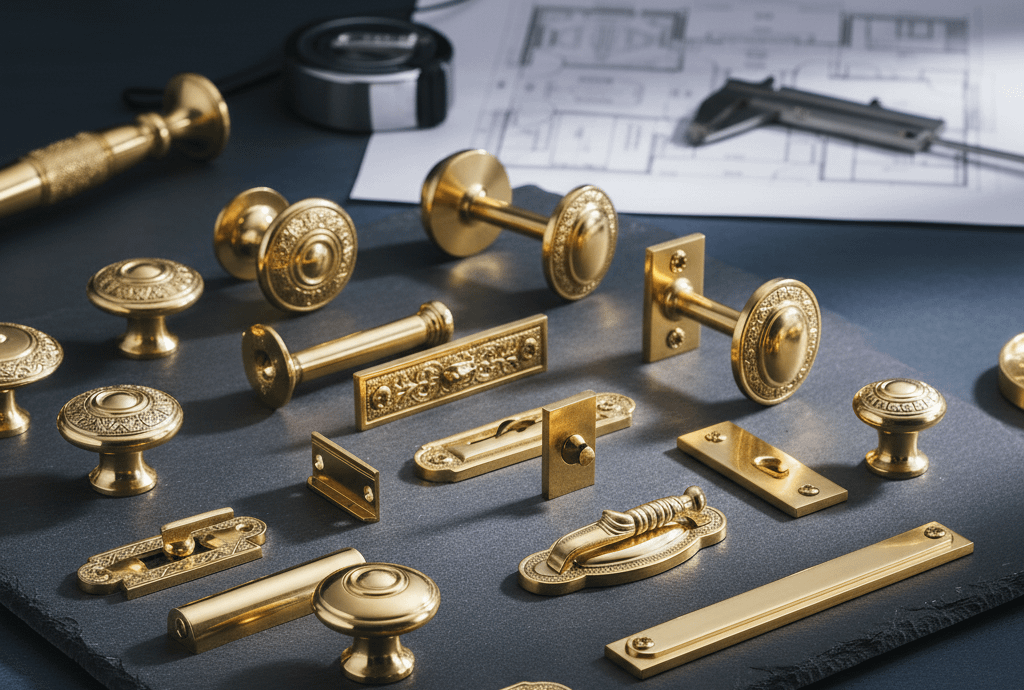
The decorative metalwork industry is experiencing a fundamental shift. After decades of cost-driven material substitution, designers, architects, and manufacturers are rediscovering why brass dominated premium applications for centuries—and why modern fabrication techniques make it more viable than ever.
This comprehensive guide examines brass decorative parts from specification through installation, covering material science, manufacturing processes, design considerations, and real-world applications across industries.
Understanding Brass as a Decorative Material
Material Composition and Properties
Brass is a copper-zinc alloy, typically containing 55-95% copper with zinc comprising the remainder. The specific ratio dramatically affects working properties, appearance, and performance characteristics.
Common Brass Alloys for Decorative Work:
1. C260 Cartridge Brass (70% Cu, 30% Zn)
- Excellent cold working properties
- Bright golden color
- Ideal for stamping, deep drawing, and spinning
- Common in decorative hardware and ornamental fixtures
2. C360 Free-Cutting Brass (61.5% Cu, 35.5% Zn, 3% Pb)
- Superior machinability
- Widely used for precision decorative components
- Excellent for intricate patterns and complex geometries
- Standard choice for CNC machined decorative parts
3. C464 Naval Brass (60% Cu, 39.25% Zn, 0.75% Sn)
- Enhanced corrosion resistance
- Suitable for marine environments and outdoor applications
- Slightly darker, richer color
- Premium choice for coastal installations
4. C230 Red Brass (85% Cu, 15% Zn)
- Warm reddish-gold appearance
- Excellent corrosion resistance
- Traditional choice for architectural applications
- Ages to distinctive brownish patina
Why Brass Outperforms Alternatives
Longevity and Durability
Unlike plated metals where thin surface coatings eventually wear through, brass is a solid alloy throughout. Surface scratches don’t reveal different materials underneath. Properly maintained brass components can perform for 50+ years in demanding environments.
A 2023 lifecycle analysis comparing decorative materials in hospitality applications found brass components averaged 22 years of service life versus 4.5 years for zinc alloy alternatives and 6.8 years for stainless steel in identical applications.
Antimicrobial Properties
Brass possesses inherent antimicrobial characteristics. Research published in the Applied and Environmental Microbiology journal demonstrated brass surfaces reduce bacterial populations by 99.9% within two hours of contact. This makes brass decorative parts particularly valuable in healthcare facilities, hospitality environments, and public spaces where touch surfaces require hygienic materials.
Workability and Customization
Brass machines beautifully. It can be cast, forged, stamped, spun, etched, engraved, and CNC machined to tolerances measured in hundredths of millimeters. This workability enables custom decorative components that would be impossible or prohibitively expensive in harder alloys.
Acoustic Properties
Brass has distinct resonance characteristics, making it valuable for decorative components where sound quality matters—door hardware that sounds substantial rather than tinny, decorative bells and chimes, and architectural elements in acoustic-sensitive spaces.
Thermal Stability
Brass maintains dimensional stability across wide temperature ranges. Decorative components won’t warp, crack, or degrade from thermal cycling in applications ranging from outdoor architectural elements to interior fixtures near heat sources.
Manufacturing Processes for Brass Decorative Parts
CNC Machining
Computer numerical control machining represents the most precise method for creating brass decorative components with complex geometries.
Process Overview:
Starting with brass bar stock or plate, CNC mills and lathes remove material according to digital specifications. Modern 5-axis machining centers can produce incredibly intricate decorative patterns, undercuts, and three-dimensional forms impossible through other methods.
Typical Tolerances: ±0.025mm to ±0.05mm depending on feature size and complexity
Best Applications:
- Architectural hardware with precise mechanical interfaces
- Decorative panels requiring intricate relief patterns
- Custom fixtures needing exact dimensional consistency
- Small to medium production runs (50-10,000 pieces)
Advantages:
- Exceptional dimensional accuracy
- Complex geometries achievable
- Rapid prototyping and design iteration
- Consistent quality across production runs
- Minimal tooling investment for custom designs
Limitations:
- Higher per-piece cost for very large quantities
- Material waste in subtractive process
- Longer production time than casting for simple shapes
Casting
Brass casting remains essential for decorative components with organic forms, sculptural elements, or very large production volumes.
Sand Casting:
Traditional method using sand molds. Ideal for large decorative pieces, one-off artistic components, and heritage restoration work matching historical casting techniques.
- Surface finish: Moderate (requires finishing)
- Dimensional tolerance: ±1-2mm typical
- Minimum wall thickness: 3-5mm
- Production efficiency: Low to medium volume
Investment Casting (Lost Wax):
Precision method producing fine detail and excellent surface finish. Standard for high-end decorative hardware, jewelry-quality components, and intricate ornamental work.
- Surface finish: Excellent (minimal finishing required)
- Dimensional tolerance: ±0.25-0.5mm
- Minimum wall thickness: 0.8-1.5mm
- Production efficiency: Medium to high volume
Advantages:
- Complex organic shapes easily produced
- Hollow sections reduce material cost and weight
- Economical for high-volume production
- Traditional aesthetic for heritage applications
Limitations:
- Tooling costs require volume justification
- Longer lead times for mold/pattern creation
- Potential for porosity in wall sections
- Post-casting finishing typically required
Stamping and Forming
Sheet brass stamping creates decorative components through progressive dies that cut, bend, emboss, and form flat brass sheet into finished parts.
Process Capabilities:
- Embossed patterns and textures
- Complex 2.5D forms
- Precision perforations
- Coined details and sharp features
Ideal Applications:
- Decorative backplates and escutcheons
- Ornamental grilles and screens
- Embossed panels and trim elements
- High-volume production (10,000+ pieces)
Advantages:
- Extremely cost-effective at volume
- Rapid production rates
- Excellent material utilization
- Consistent dimensional accuracy
Limitations:
- High tooling investment (economical only at scale)
- Design constraints around draw depth and feature size
- Limited to relatively thin materials (typically <3mm)
Hybrid Manufacturing
Contemporary brass decorative parts increasingly combine multiple processes to optimize both aesthetics and economics.
Example: A decorative door handle might use investment casting for the ornamental grip section (complex organic form), CNC machining for the mounting interface (precise tolerances), and stamping for the decorative backplate (cost efficiency).
This approach delivers design freedom where it matters while controlling costs in standard sections.
Surface Finishing Techniques
The finish transforms brass from raw component to refined decorative element. Finishing choices affect appearance, maintenance requirements, and longevity.
Polished Finishes
Mirror Polish: High-gloss reflective surface achieved through progressive abrasive polishing and buffing compounds. Creates brilliant gold appearance but shows fingerprints and requires regular maintenance. Common in luxury hospitality and high-end residential applications.
Satin/Brushed: Directional grain pattern created with fine abrasives. More forgiving than mirror polish, hides minor scratches, maintains warm brass appearance without high gloss. Popular for contemporary architectural hardware.
Protective Coatings
Lacquer: Clear coating prevents oxidation and tarnishing, maintaining original brass appearance indefinitely. Standard for interior applications where patina development isn’t desired. Requires periodic reapplication (typically 3-5 years in high-touch areas).
Wax: Traditional protective treatment providing subtle luster and mild tarnish resistance. Allows gradual patina development while protecting against rapid oxidation. Requires more frequent maintenance but easily renewable by building staff.
PVD Coating: Physical Vapor Deposition applies ultra-thin, extremely durable metallic coating. Used to modify brass color (bronze tones, darker finishes) or enhance durability in demanding applications. Essentially permanent but adds significant cost.
Living Finishes
Uncoated brass allowed to develop natural patina through oxidation. The brass darkens gradually, developing brownish tones and varied coloration that many designers find desirable.
Characteristics:
- Constantly evolving appearance
- Touch marks create darker areas (handle grips, frequently touched sections)
- Requires client education about expected aging
- No maintenance required
- Increasingly popular in boutique hospitality and high-end residential
Accelerated Patina: Chemical treatments artificially age brass, creating immediate antique appearance. Options range from subtle darkening to heavy oxidation effects. Subsequent wax or lacquer sealing maintains the achieved patina.
Specialty Finishes
Antique/Vintage: Multi-step process creating aged appearance through chemical darkening, selective polishing of raised areas, and protective sealing. Replicates decades of natural aging instantly.
Hammered/Textured: Mechanical surface texturing creates reflective facets and tactile interest. Particularly effective for larger decorative panels and architectural elements.
Etched/Engraved: Chemical etching or mechanical engraving removes material to create patterns, text, or imagery. Can be combined with contrasting finishes (polished pattern on brushed background).
Design Considerations and Best Practices
Dimensional Stability and Tolerances
Brass exhibits minimal thermal expansion compared to plastics and composites, but designers must still account for material behavior:
Coefficient of Thermal Expansion: 19-20 × 10⁻⁶ /°C
For a 1-meter brass decorative panel experiencing a 50°C temperature swing (extreme scenario), expect approximately 1mm dimensional change. In typical interior applications (10-20°C variation), movement is negligible.
Critical tolerance zones:
- Mechanical interfaces (mounting points, threaded connections): ±0.05mm
- Visible gaps and reveals: ±0.1mm
- Overall decorative dimensions: ±0.5mm typically acceptable
Weight Considerations
Brass density: approximately 8.4-8.7 g/cm³ (depending on alloy)
This makes brass significantly heavier than aluminum (2.7 g/cm³) and dramatically heavier than plastics. Weight impacts:
Structural Support Requirements: Decorative brass panels and substantial hardware require appropriate backing and fastening. A 600mm × 600mm × 3mm brass panel weighs approximately 9.5kg—wall substrates must support this load plus safety factor.
Installation Methodology: Heavy decorative components may require specialized mounting hardware, toggle mechanisms, or structural backing that lightweight alternatives wouldn’t need. Budget installation time and complexity accordingly.
Shipping and Handling: Brass decorative parts cost more to ship than lighter alternatives. For large installations, freight costs become significant budget considerations.
Fastening and Mounting
Brass decorative components require thoughtful attachment methods:
Direct Threading: Brass can be tapped for threaded fasteners. Minimum material thickness of 1.5× thread diameter recommended for structural integrity. For decorative elements without structural loads, thinner sections work with thread inserts.
Adhesive Bonding: Modern structural adhesives bond brass effectively to various substrates. Two-part epoxies, methacrylate adhesives, and specialized construction adhesives all work. Surface preparation (degreasing, light abrasion) critical for bond strength.
Mechanical Fastening: Traditional screws, bolts, and rivets remain reliable. Stainless steel fasteners prevent galvanic corrosion. Brass fasteners maintain aesthetic consistency but may require anti-seize compound for future serviceability.
Concealed Mounting: Premium decorative installations often hide fasteners through:
- French cleats for panels and mirrors
- Proprietary snap-fit systems for modular components
- Adhesive with discrete mechanical backup
- Integrated keyhole mounts machined into components
Galvanic Compatibility
When brass contacts dissimilar metals in the presence of electrolyte (moisture), galvanic corrosion can occur. The metal higher in the galvanic series corrodes preferentially.
Safe Combinations:
- Brass + Stainless Steel (minimal corrosion potential)
- Brass + Bronze (essentially identical galvanically)
- Brass + Copper (compatible, minimal risk)
Problematic Combinations:
- Brass + Aluminum (aluminum corrodes)
- Brass + Galvanized Steel (zinc coating corrodes rapidly)
- Brass + Carbon Steel (steel corrodes unless isolated)
Mitigation Strategies:
- Isolate dissimilar metals with non-conductive barriers (plastic washers, rubber gaskets)
- Apply protective coatings to more reactive metal
- Use stainless steel fasteners as neutral intermediary
- Eliminate moisture exposure through design or sealants
Applications Across Industries
Architectural Hardware
Brass decorative hardware creates tactile quality and visual distinction in premium construction.
Door Hardware: Handles, levers, knobs, escutcheons, push plates, and kickplates. Brass provides substantial feel that communicates quality immediately upon building entry. Investment casting allows intricate period-appropriate designs for heritage buildings while CNC machining enables contemporary geometric forms.
Cabinet and Furniture Hardware: Pulls, knobs, hinges, latches, and decorative brackets. The warm brass tone complements wood finishes particularly well. Living finish brass hardware develops character matching furniture patina over time.
Stair and Railing Components: Newel post caps, decorative balusters, handrail brackets, and ornamental connection points. Brass accents break up monotonous railing runs while providing durable, easily gripped surfaces.
Plumbing Fixtures: Decorative escutcheons, shower trim, faucet handles, and towel bars. Antimicrobial properties make brass especially appropriate for bathroom environments. Living finish options eliminate maintenance burden while developing sophisticated patina.
Interior Design Elements
Decorative Panels and Wall Treatments:
Brass panels function as feature walls, elevator cabs, column cladding, and architectural accent surfaces. Perforated brass panels provide visual privacy screens while maintaining openness. Etched or embossed patterns create dramatic lighting effects when backlit.
Case Study: A boutique hotel in Singapore clad elevator interiors with custom-etched brass panels depicting local botanical illustrations. The living finish develops unique character in each elevator based on traffic patterns—frequently used elevators show darker patina on common touch points, creating unintentional but appreciated variation.
Lighting Fixtures:
Brass lamp bodies, decorative shades, chandelier arms, and sconce backplates. The material’s thermal stability handles heat from traditional bulbs while its formability enables everything from traditional candelabra to contemporary geometric forms.
Inlay and Accent Work:
Brass inlay in wood furniture, concrete countertops, terrazzo flooring, or stone surfaces creates striking contrast. The material machines to precise shapes for tight-fitting inlays. Can be installed flush or slightly proud as deliberate tactile detail.
Automotive and Transportation
Luxury Automotive Interiors:
Premium vehicle manufacturers increasingly specify brass decorative trim, speaker grilles, control bezels, and detail elements. The material communicates permanence and craftsmanship impossible with plastic alternatives. CNC machining enables integration with complex dashboard geometries and modern electronic controls.
Marine Applications:
Naval brass (C464) delivers corrosion resistance for yacht hardware, decorative portholes, galley fixtures, and cabin detailing. The traditional maritime association of brass enhances authentic nautical aesthetic. See our Brass Marine Parts.
Aviation:
Decorative brass appears in executive aircraft interiors—seat hardware, cabinet fixtures, and lavatory details. Weight concerns limit applications, but antimicrobial properties and premium appearance justify use in high-touch areas.
Hospitality and Retail
Hotel Environments:
Brass decorative components appear throughout upscale hospitality—reception desk panels, directory boards, elevator trim, door hardware, bathroom fixtures, furniture accents, and lighting. The material withstands intensive use while maintaining appearance.
Example: A luxury hotel chain replaced zinc alloy bathroom fixtures across their portfolio after three-year failure rates exceeded 40%. Brass alternatives showed essentially zero failures after five years, with maintenance costs dropping 67% despite higher initial investment.
Restaurant and Bar Applications:
Decorative brass bar rails, menu boards, table bases, and accent lighting. The warm material complements dark woods and leather typical in upscale dining environments. Living finishes develop rich patina that reinforces established, quality atmosphere.
Retail Fixtures:
Display hardware, clothing racks, signage, and architectural details. Brass creates luxury positioning for premium brands. Consistency across fixtures establishes cohesive brand environment.
Heritage Restoration
Period-Accurate Reproduction:
Historical preservation requires matching original brass components exactly. Modern manufacturing can replicate antique casting techniques, traditional finishes, and period-appropriate alloys to maintain architectural integrity.
Functional Upgrades:
Contemporary brass decorative parts can incorporate modern functionality (ADA-compliant dimensions, electronic access controls, modern mounting systems) while maintaining historical aesthetic. CNC machining enables precise reproduction of hand-crafted originals with reliability modern buildings require.
Specifying Brass Decorative Parts
Essential Specification Elements
Material Specification:
- Exact alloy designation (C260, C360, C464, etc.)
- Compliance standards (ASTM B36, B16, etc.)
- Recycled content percentage if required
- Material certifications and mill test reports
Dimensional Requirements:
- Critical dimensions with tolerances
- Reference standard for general tolerances (ISO 2768-m, etc.)
- Flatness/straightness requirements for panels
- Finish dimensions vs. rough casting dimensions
Surface Finish:
- Desired appearance (mirror polish, satin, brushed direction)
- Protective coating type and specification
- Living finish intent (if applicable)
- Special treatments (patina, antiquing, etc.)
Performance Requirements:
- Load-bearing capacity (if structural)
- Wear resistance expectations
- Corrosion resistance environment
- Antimicrobial performance (if relevant)
Quality Assurance:
- Inspection criteria and acceptance standards
- Testing requirements (dimensional, mechanical, finish)
- Sample approval process
- Documentation and certifications required
Sample Specification Language
“Decorative brass panel shall be fabricated from C260 cartridge brass, 3mm nominal thickness, cut and finished to dimensions shown on drawing D-101. Surface shall receive uniform satin finish with grain direction horizontal as installed, followed by clear lacquer coating per manufacturer’s standard process. Edges shall be deburred to 0.5mm max radius. Panel shall mount to substrate using concealed mechanical fasteners per detail 3/D-102, with no visible fasteners on exposed face. Flatness tolerance: 2mm maximum deviation over 1-meter span. Submit material certification, sample panel, and installation instructions for approval prior to fabrication.”
Sustainability Documentation
Increasingly, specifications require environmental credentials:
- Recycled Content: Brass contains significant recycled material (often 70-90% post-consumer recycled copper and zinc). Request recycled content documentation.
- EPD (Environmental Product Declaration): Third-party verified lifecycle environmental impact assessment. Available from manufacturers with robust sustainability programs.
- Material Health: Brass contains no hazardous substances and qualifies for most material health requirements. Declare certifications (Cradle to Cradle, HPD, etc.) streamline specification compliance.
- End-of-Life: Brass is infinitely recyclable without quality degradation. Include language specifying return of scrap and off-cuts to recycling stream.
Cost Considerations and Value Analysis
Pricing Factors
Material Cost: Brass pricing fluctuates with copper commodity markets. Current (2026) range: $8-12/kg for raw brass depending on alloy and form. Represents 30-50% of finished component cost for CNC machined parts, less for castings.
Manufacturing Process:
- CNC Machining: $45-150/hour machine time depending on complexity
- Investment Casting: Primarily tooling cost ($800-5,000 per mold) plus $3-15/piece casting cost
- Stamping: High tooling cost ($5,000-25,000) but low per-piece cost ($0.50-5.00)
Finishing:
- Polishing: $8-25/piece depending on size and complexity
- Lacquering: $3-8/piece
- Living finish (no coating): $2-5/piece for cleaning only
- Specialty finishes: $15-50/piece
Volume Economics:
| Quantity | Typical Cost Range (Simple Handle) |
|---|---|
| 1-10 pieces | $85-120 each (prototype/custom) |
| 50-100 pieces | $42-65 each |
| 500-1,000 pieces | $28-38 each |
| 5,000+ pieces | $15-22 each |
Lifecycle Cost Analysis
Initial cost tells incomplete story. Lifecycle analysis often justifies brass specification:
Replacement Frequency:
- Brass decorative parts: 20-50 year service life
- Zinc alloy alternatives: 3-7 year service life
- Plated steel: 5-10 year service life
Maintenance Costs:
- Living finish brass: essentially maintenance-free (periodic cleaning only)
- Lacquered brass: recoating every 3-5 years ($8-15/piece)
- Plated alternatives: no maintenance possible; replacement only when finish fails
Installation Costs: Each replacement requires labor, coordination, and potential disruption. For hotel door hardware, replacement labor often exceeds material cost.
20-Year Lifecycle Comparison (Hotel Door Lever Set):
Brass (Living Finish):
- Initial cost: $180
- Maintenance: $60 (cleaning/adjustment)
- Total: $240
Zinc Alloy (Plated):
- Initial cost: $45
- Replacements: 4 × $45 = $180
- Installation labor: 4 × $35 = $140
- Total: $365
This analysis excludes disruption costs, warranty claims, and reputation impact from visible component degradation.
Quality Assessment and Inspection
Visual Inspection Criteria
Surface Finish:
- Uniform appearance without scratches, gouges, or tool marks
- Consistent grain direction on brushed finishes
- No buffing compound residue or contamination
- Coating evenly applied without runs, holidays, or discoloration
Dimensional Verification:
- Critical dimensions within specified tolerances
- Mounting holes correctly positioned and sized
- Edge breaks and radii consistent
- No warpage, twisting, or dimensional distortion
Casting Quality:
- No visible porosity on functional or visible surfaces
- Uniform wall thickness (for hollow cast components)
- Complete fill in fine details and thin sections
- Clean parting lines with minimal flash
Mechanical Testing
Load Testing: Decorative components with structural function require verification:
- Pull/push testing for handles and levers
- Cantilever loading for brackets and supports
- Cyclic testing for repeatedly operated components
- Fastener pullout testing for mounted panels
Durability Testing:
- Abrasion resistance (Taber test for wear patterns)
- Salt spray testing (ASTM B117 for corrosion resistance)
- Accelerated aging (UV, thermal cycling for outdoor applications)
- Finish adhesion (cross-hatch, tape test for coatings)
Material Verification
Alloy Confirmation: X-ray fluorescence (XRF) spectroscopy rapidly confirms brass composition. Ensures specified alloy was actually used. Critical for projects requiring specific alloy properties (corrosion resistance, antimicrobial performance, color matching).
Hardness Testing: Rockwell or Brinell hardness testing verifies proper annealing or work-hardening state. Affects machinability, formability, and service performance.
Installation Guidelines
Surface Preparation
Substrate Requirements:
Brass decorative parts require appropriate backing:
- Solid mounting: wood blocking, metal framing, or structural substrate
- Hollow wall mounting: toggle bolts, molly bolts, or structural anchors rated for component weight plus safety factor
- Adhesive installation: clean, dry, sound surface with adequate bond area
Environmental Considerations:
Avoid installation in:
- Areas with sustained moisture exposure without proper drainage
- Direct contact with incompatible metals without isolation
- High-chloride environments (coastal, pool areas) without corrosion-resistant alloys
- High-traffic areas without adequate structural support
Fastening Best Practices
Mechanical Fasteners:
- Use stainless steel screws/bolts to prevent galvanic corrosion
- Apply anti-seize compound to brass-on-brass threaded connections
- Avoid over-torquing—brass threads strip more easily than steel
- Use washers to distribute loads and prevent fastener pullthrough
Adhesive Installation:
- Degrease brass and substrate with isopropyl alcohol
- Light abrasion (180-220 grit) improves adhesive bond
- Use construction adhesive rated for metal-to-substrate application
- Add mechanical backup for critical installations
- Allow full cure time before removing temporary support
Panel Systems:
- Ensure z-clips, French cleats, or proprietary mounting systems properly aligned
- Verify wall attachment points hit solid backing
- Use multiple attachment points for large panels (minimum 4 points for panels >600mm)
- Include anti-rattle padding to prevent contact noise
Handling and Protection
Installation Care:
- Wear clean cotton gloves to prevent fingerprints on polished finishes
- Use protective padding on contact points with lifting equipment
- Avoid dragging brass components across surfaces (scratching risk)
- Keep protective wrapping in place until final installation
Post-Installation:
- Remove any installation debris or residue immediately
- Apply specified protective coating if part of installation scope
- Photograph installation for record documentation
- Provide owner with maintenance instructions specific to finish type
Maintenance and Long-Term Care
Routine Maintenance by Finish Type
- Polished Brass (Lacquered):
Weekly: Dust with soft, dry microfiber cloth Monthly: Clean with mild soap and water, dry immediately Annually: Inspect lacquer for damage; touch up or recoat as needed
Avoid: Abrasive cleaners, acidic solutions, ammonia-based products
- Living Finish Brass:
Weekly: Dust with soft cloth or brush Quarterly: Clean with mild soap and water if desired As Needed: Allow natural patina to develop; don’t attempt to “restore” original color
The beauty of living finish is minimal maintenance. Educate building occupants that darkening and variation is intentional, not neglect.
- Antiqued/Patina Finish:
Monthly: Gentle dusting only Annually: Reapply protective wax if specified
Avoid: Any cleaning that removes artificial patina
Restoration and Refinishing
Minor Damage:
Scratches in polished brass can often be buffed out with jeweler’s rouge and soft cloth. Deeper scratches require progressive polishing with finer abrasives.
Lacquer Failure:
When lacquer becomes cloudy, peeling, or discolored:
- Remove existing lacquer with commercial stripper
- Clean brass thoroughly
- Re-polish to desired finish
- Apply fresh lacquer coating
Professional refinishing recommended for large or complex components.
Patina Removal:
If living finish brass develops unwanted appearance:
- Clean with brass polish or mild acid (lemon juice, vinegar)
- Rinse thoroughly and dry
- Re-lacquer to prevent future tarnishing, or
- Allow to re-develop natural patina
Long-Term Performance
Properly specified and maintained brass decorative parts essentially last indefinitely. Buildings from the late 1800s routinely feature original brass hardware still fully functional after 130+ years.
Factors Affecting Longevity:
- Alloy selection appropriate to environment
- Proper installation preventing stress concentration
- Compatible materials preventing galvanic corrosion
- Maintenance matching finish type
- Protection from extreme chemical exposure
Sustainability and Environmental Considerations
Material Sourcing
Recycled Content:
Brass production routinely incorporates 70-90% post-consumer recycled copper and zinc. The material’s value incentivizes recovery—virtually all brass eventually returns to use.
Energy Intensity:
Producing brass from recycled material requires approximately 90% less energy than primary production from ore. Specifying high recycled content significantly reduces embodied energy.
Responsible Mining:
For virgin copper and zinc content, responsible sourcing certifications (Copper Mark, Responsible Minerals Initiative) verify environmental and social standards in mining operations.
Lifecycle Environmental Impact
Longevity = Sustainability:
The single most significant environmental benefit of brass decorative parts is durability. Components lasting 50 years avoid the repeated environmental impact of manufacturing, shipping, installing, and disposing of short-lived alternatives.
End of Life:
Brass maintains full value at end of life. Decorative components can be:
- Melted and reprocessed into new brass
- Directly reused in new installations
- Repurposed into different products
Unlike composite materials or plated components, brass requires no special processing for recycling—simply sort by alloy type and remelt.
Circular Economy:
Brass exemplifies circular economy principles. The material cycles indefinitely without quality loss. A decorative brass component might contain copper first mined in the 1920s, recycled multiple times through various products.
Environmental Product Declarations
Progressive brass manufacturers provide third-party verified Environmental Product Declarations (EPDs) documenting:
- Global warming potential
- Resource depletion
- Water consumption
- Acidification and eutrophication
- Photochemical ozone creation
These transparent lifecycle assessments enable informed specification decisions and contribute to building certification (LEED, BREEAM, etc.).
Future Trends and Innovations
Digital Manufacturing Integration
Generative Design:
AI-assisted design optimization creates brass decorative components impossible through traditional design methods. Algorithms generate forms optimized for structural efficiency, material minimization, or specific aesthetic parameters while ensuring manufacturability.
Additive Manufacturing:
Metal 3D printing enables brass components with internal geometries and organic forms impossible through conventional manufacturing. While currently expensive for decorative applications, costs decline as technology matures. Expect hybrid approaches combining 3D printed decorative elements with conventional manufacturing for structural sections.
Smart Integration
Embedded Technology:
Brass decorative components increasingly incorporate electronic functionality:
- Touch-sensitive controls in decorative panels
- Integrated LED illumination in architectural elements
- RFID or NFC capability in access hardware
- Environmental sensors in decorative grilles
The challenge lies in maintaining brass aesthetics while integrating technology unobtrusively.
Sustainable Innovations
Carbon-Neutral Brass:
Forward-thinking manufacturers offset production emissions through renewable energy, carbon capture investment, or verified offset programs. Expect carbon-neutral brass decorative parts becoming specification standard in sustainability-focused projects.
Bio-Based Protective Coatings:
Traditional lacquers rely on petroleum-derived chemistry. Emerging bio-based coatings derived from plant materials offer similar protective performance with reduced environmental impact.
Design Movement
New Maximalism:
After decades of minimalism, pendulum swings toward pattern, texture, and ornament. Brass decorative components with intricate detailing, bold patterns, and unabashed materiality align with this aesthetic shift.
Material Honesty:
Growing rejection of materials pretending to be something else. Brass specified because it IS brass—not because it mimics gold or imitates bronze. Living finishes that acknowledge aging rather than fighting it exemplify this trend.
Conclusion
Brass decorative parts represent convergence of traditional material excellence and contemporary manufacturing capability. The material that dominated decorative applications for centuries proves equally relevant in modern design—perhaps more so as sustainability, longevity, and authentic materials gain importance.
Successful brass decorative component specification requires understanding:
- Material properties and alloy selection
- Manufacturing process capabilities and limitations
- Finish options and maintenance requirements
- Installation considerations and compatibility
- Lifecycle performance and value proposition
The brass resurgence isn’t nostalgia—it’s recognition that some materials simply perform better, last longer, and age more gracefully than alternatives developed primarily for cost reduction.
For architects, designers, and manufacturers serious about creating environments that improve with time rather than degrade, brass decorative parts deserve careful consideration.
Ready to explore brass decorative parts for your next project?
Visit Boltorq Brassmet to see our manufacturing capabilities, review technical specifications, and discuss custom decorative components.


0 Comments