The Ultimate Guide to Brass Hose Fittings: Why Precision Matters for Your Fluid Systems
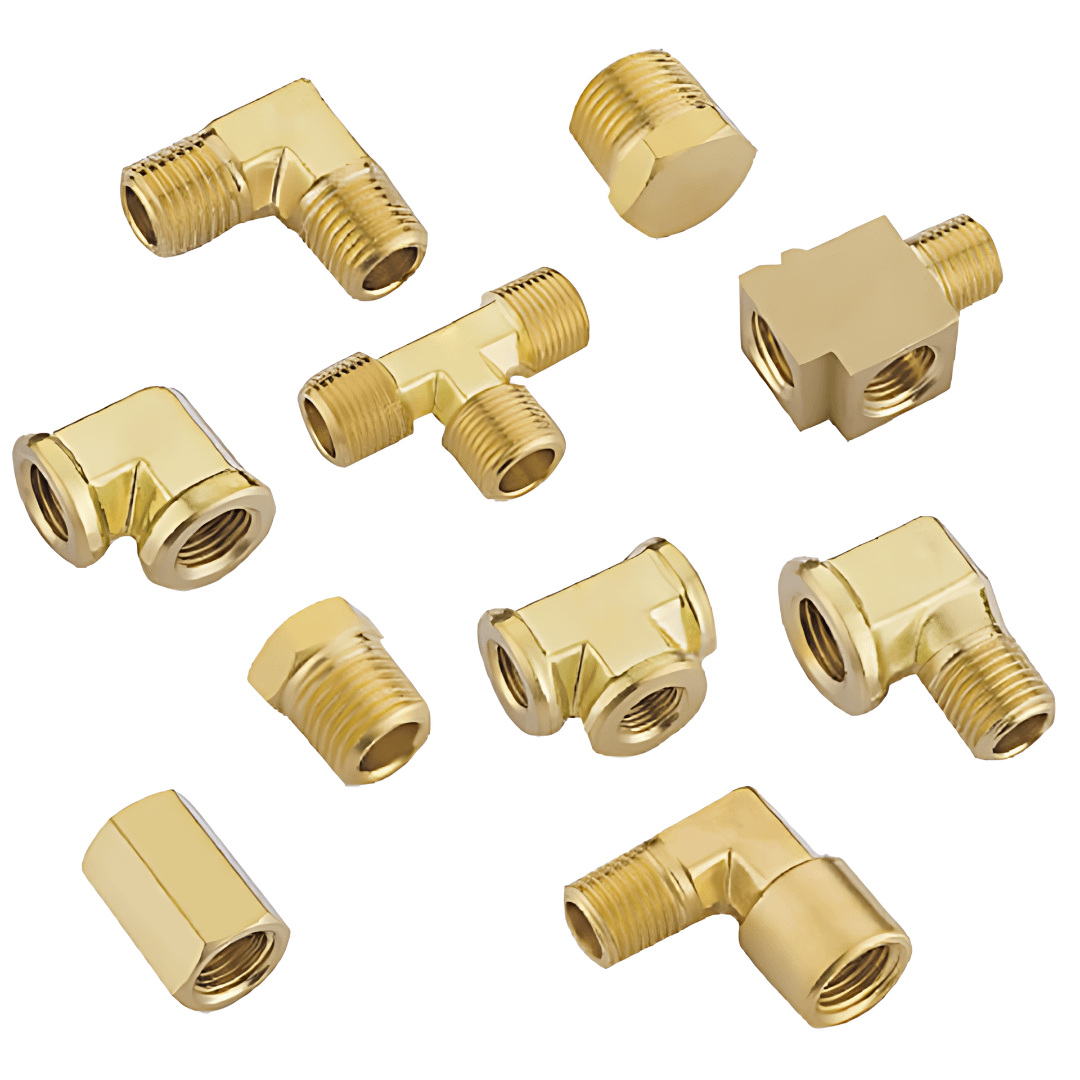
When it comes to maintaining a leak-proof, high-pressure fluid or gas system, the smallest component often carries the biggest responsibility. Brass hose fittings have long been the industry standard for professionals who refuse to compromise on durability.
From the industrial heart of Jamnagar to the global manufacturing stage, these components are the unsung heroes of automotive, plumbing, and industrial machinery. In this guide, we explore why brass is the superior choice for hose connections and how to source the best fittings in India.
Why Choose Brass for Hose Fittings?
Engineers and contractors face a constant choice: Plastic, Stainless Steel, or Brass? While each has its place, brass offers a unique “Goldilocks” zone of properties that make it ideal for hose applications.
- Extreme Durability: Unlike plastic, brass won’t crack under UV exposure or become brittle in freezing temperatures. It can handle pressures up to 3,000 PSI depending on the design.
- Corrosion Resistance: Brass is naturally resistant to rust. This makes it perfect for systems carrying water, slurries, or even flammable gases.
- Superior Machinability: Because brass is highly workable, manufacturers like Boltorq BrassMet can produce fittings with incredibly tight tolerances, ensuring a perfect seal every time.
- Thermal Tolerance: Brass maintains its structural integrity at high temperatures (up to 400°F), making it the go-to for engine cooling and hot water lines.
Common Types of Brass Hose Fittings and Their Uses
Not all fittings are created equal. Choosing the right “end” for your hose is critical for safety and efficiency.
| Fitting Type | Best Use Case | Key Benefit |
| Hose Barbs | General fluid transfer, air lines | Easy to install with a simple hose clamp. |
| Compression Fittings | Plumbing & Instrumentation | Creates a leak-proof seal without soldering or flaring. |
| Flare Fittings | Automotive & High-Pressure Gas | Highest resistance to vibration and mechanical pull-out. |
| Garden Hose Thread (GHT) | Irrigation & Residential | Standardized threads for easy, tool-free connections. |
Sourcing from the Hub: The Jamnagar Advantage
If you are looking for high-quality brass components, Jamnagar, Gujarat is the undisputed capital. As India’s “Brass City,” Jamnagar produces over 60% of the country’s brass parts.
Sourcing from a Jamnagar-based leader like Boltorq BrassMet ensures you benefit from:
- Lower Lead Times: Integrated foundries and machining units work side-by-side.
- Global Standards: Parts are manufactured to meet ISO, SAE, and DIN specifications.
- Cost Efficiency: Massive economies of scale allow for premium quality at competitive Indian pricing.
Boltorq BrassMet: Your Trusted Partner for Precision Fittings
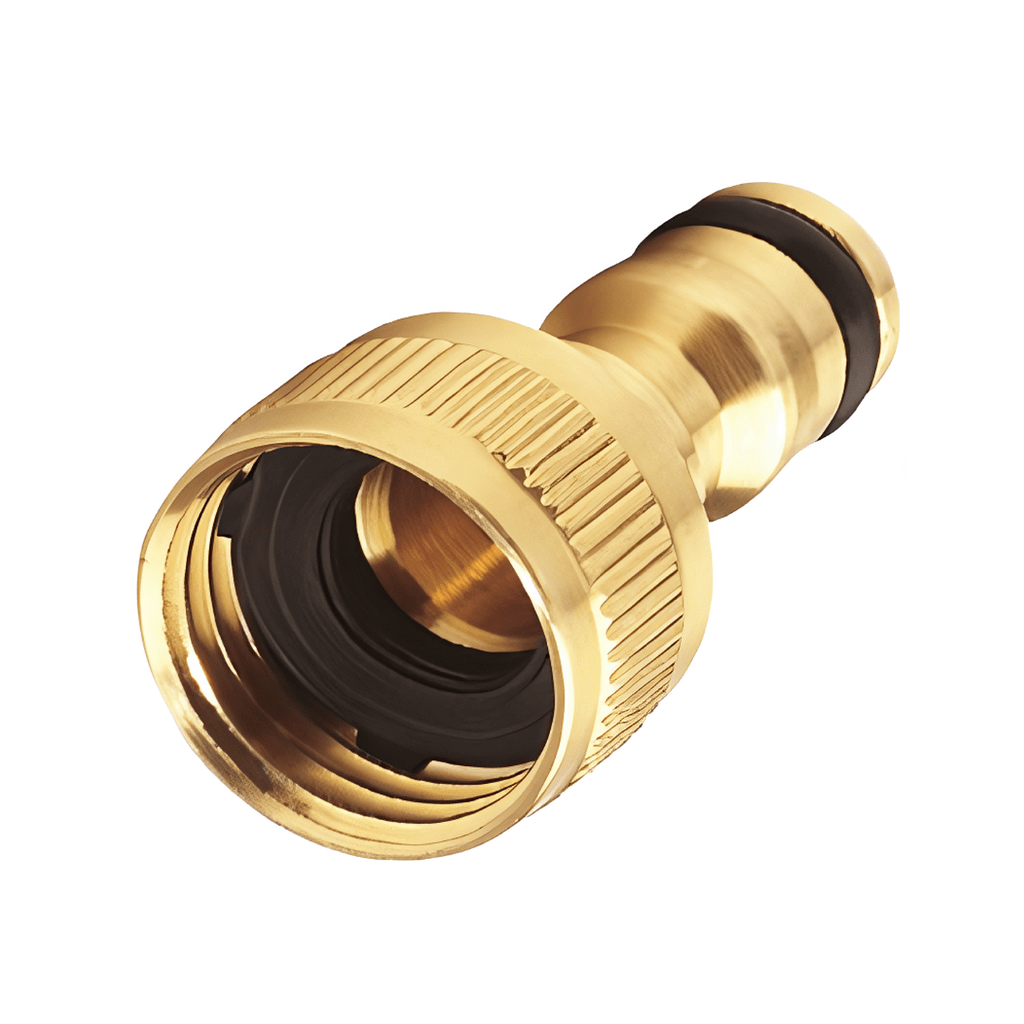
At Boltorq BrassMet, we don’t just sell fittings; we provide reliability. Our state-of-the-art facility in Jamnagar specializes in:
- Custom CNC Machined Parts: Need a specific thread or a unique barb diameter? We manufacture to your exact CAD drawings.
- High-Grade Alloys: We use only premium brass (Free Cutting, Lead-Free, or DZR) to ensure your project meets environmental and safety standards.
- Quality Assurance: Every batch undergoes rigorous pressure testing to prevent the “hidden leaks” that cause system downtime.
Industry Insight: Many “cheap” fittings use recycled alloys with high impurities, which can lead to stress cracking. At Boltorq BrassMet, we prioritize material purity to guarantee a longer service life.
Conclusion: Secure Your System Today
A hose system is only as strong as its weakest connection. By choosing high-quality brass fittings, you invest in the safety and longevity of your equipment.
Ready to upgrade your inventory or source parts for a new project? Visit boltorqbrassmet.com to browse our catalog or contact our technical team for a custom quote. Let us show you why the best fluid systems in India start with Boltorq.
FAQs
Why are brass hose fittings preferred over stainless steel or plastic?
Brass offers the perfect balance of durability and cost-effectiveness. Unlike plastic, it won’t become brittle or crack under UV exposure and high heat. Compared to stainless steel, brass is more malleable, allowing for a tighter, leak-proof “seat” in threaded connections. It also provides superior thermal conductivity and is easier to machine for custom automotive or industrial requirements.
Can brass hose fittings be used for high-pressure applications?
Yes. Depending on the specific design and alloy, brass fittings can typically handle pressures up to 3,000 PSI. However, for extreme high-pressure hydraulic systems (above 5,000 PSI), specialized steel fittings may be required. For most automotive fuel, cooling, and industrial air systems, brass is the industry standard for safety and performance.
Do brass fittings rust or corrode over time?
Brass does not rust because it contains no iron. It is highly resistant to corrosion from water, salt, and various chemicals. While it may develop a surface patina (darkening) over time, this actually acts as a protective layer. For harsh marine environments, Naval Brass (C46400) is often used to prevent “dezincification,” ensuring the fitting remains structurally sound.
How do I know if I need NPT, BSP, or Metric threads?
Thread type usually depends on the region and the equipment:
1. NPT (National Pipe Thread): Common in the USA and North American automotive systems.
2. BSP (British Standard Pipe): Widely used in India, Europe, and the UK.
3. Metric: Standard for many modern European and Japanese vehicles. Pro Tip: Never force mismatched threads. Use a thread gauge or consult the experts at Boltorq BrassMet to ensure a perfect match.
Are brass hose fittings safe for drinking water (potable water)?
For drinking water applications, you must use Lead-Free Brass (such as C37700 or CW617N). These alloys meet strict international health standards (like RoHS and REACH) to ensure no harmful lead leaches into the water supply. Always verify the material certification with your supplier before installation in plumbing systems.


0 Comments