Custom Brass Parts: The 2026 Guide to Precision Manufacturing in India
In the rapidly evolving industrial landscape of 2026, “off-the-shelf” is no longer an option for high-performance engineering. From EV battery connectors to aerospace fasteners, the demand for custom brass parts has surged by nearly 15% this year alone.
But sourcing custom components involves more than just sending a CAD drawing. It requires an understanding of alloy metallurgy, precision tolerances, and the strategic advantages of India’s manufacturing clusters.
Why Brass for Custom Precision Components?
Brass remains the “Goldilocks” metal for custom machining. In 2026, with the push for sustainable manufacturing, its 100% recyclability and excellent machinability make it the top choice for OEMs (Original Equipment Manufacturers).
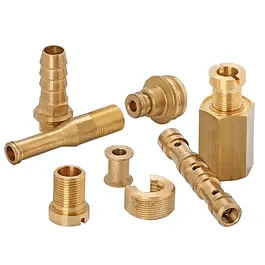
- High Machinability: Alloys like C36000 (Free Cutting Brass) allow for high-speed CNC turning with minimal tool wear, reducing your “cost per part.”
- Corrosion Resistance: Unlike steel, brass develops a protective patina, making it indispensable for marine hardware and HVAC systems.
- Electrical Conductivity: Essential for the booming Indian EV market, custom brass terminals offer the reliability needed for high-voltage battery systems.
Advanced Processes for Custom Brass Manufacturing
Depending on your part’s geometry and volume, Indian manufacturers typically utilize three primary processes:
1. CNC Turning & Milling (Precision Focus)
Best for small-to-medium batches requiring tolerances as tight as ±0.01 mm.
- Common Parts: Threaded inserts, sensor housings, and medical valve components.
- Geo-Hub: Jamnagar, Gujarat, is currently the global leader in precision-turned brass parts.
2. Cold Forging (Strength Focus)
In 2026, high-strength applications like automotive safety systems lean toward cold forging. This process aligns the grain structure, significantly increasing fatigue resistance.
3. Automatic Pressure Die Casting (Volume Focus)
When you need 50,000+ units with complex external shapes, die casting offers the best ROI.
Sourcing in India: The Strategic Advantage
India has solidified its position as a “Quality-First” hub. For international buyers and local Tier-1 suppliers, the focus has shifted from “cheap” to “certified.”
| Region | Specialization | Key Advantage |
| Jamnagar (Gujarat) | Precision Turned Parts | Massive ecosystem; lowest lead times. |
| Pune (Maharashtra) | Automotive & EV Components | Close proximity to major Auto OEMs; R&D focus. |
| Bengaluru (Karnataka) | Aerospace & Electronics | High-tech compliance; AS9100 certified foundries. |
How to Ensure Quality in Custom Brass Orders
When vetting a supplier, ensure they provide:
- Material Test Certificates (MTC): Verified chemical composition of the alloy.
- RoHS & REACH Compliance: Non-negotiable for exports to Europe and the US.
- PPAP Documentation: Level 3 PPAP is now a standard requirement for Indian automotive custom parts.
Read Also: Why Brass Cable Glands are the Gold Standard for Industrial Wiring Safety
Frequently Asked Questions
What is the typical lead time for custom brass parts in India?
For CNC machined parts, prototypes usually take 7-10 days. Bulk production (10,000+ pieces) typically spans 4-6 weeks depending on the complexity of secondary operations like nickel or tin plating.
Which brass grade is best for electrical connectors?
C3602 or C3604 (Free Cutting Brass) is widely used due to its balance of conductivity and ease of high-volume manufacturing.
How do I reduce the cost of custom brass components?
Optimize for “standard” rod sizes to minimize scrap, and aim for a surface finish of Ra 0.8 to 1.6 unless higher precision is strictly required for functionality.
The Verdict: Your Partner in Precision
Custom brass parts are the silent heroes of modern technology. Whether you’re a startup in Bengaluru or an industrial giant in Germany, the secret to a successful project lies in early-stage collaboration with a manufacturer who understands your specific industry’s “stress points.”


0 Comments