Custom Brass Components From Drawing: A Complete OEM Guide

When an OEM needs a brass component that is not available as a standard catalogue part, the most reliable approach is often manufacturing directly from the customer’s drawing, CAD file, specification or sample.
Drawing-based manufacturing allows the component supplier to work around the customer’s actual dimensional, functional and application requirements instead of forcing the requirement into a standard product.
For OEM buyers, this means the process can start with something as simple as a PDF drawing, CAD file, STEP/DXF file, photograph, physical sample or technical specification.
At BRASSMET INDUSTRIES, the focus is on custom brass and metal components for OEM and industrial requirements, including prototype, small-batch and repeat-production requirements.
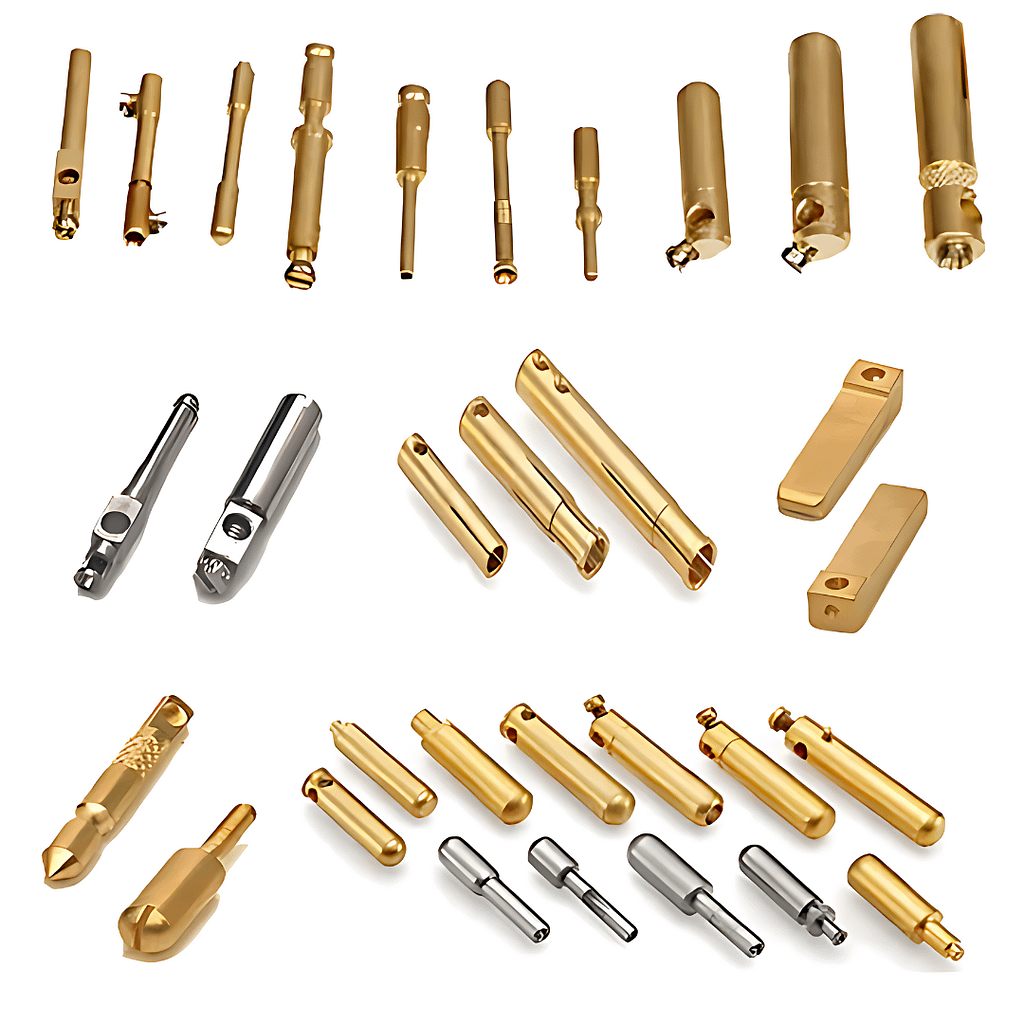
What Are Custom Brass Components From Drawing?
Custom brass components from drawing are components manufactured according to a customer’s engineering drawing or technical specification.
Instead of selecting a standard component, the manufacturer reviews the required geometry, dimensions, threads, holes, grooves, shoulders, knurling, surface finish and other specified features before production.
Typical custom components can include:
- Brass bushes
- Brass spacers
- Brass standoffs
- Brass sleeves
- Brass pins
- Brass shafts
- Brass collars
- Brass rings
- Electrical terminals
- Contact pins
- Connector components
- Pneumatic connectors
- Brass adapters
- Threaded plugs
- Valve components
- Threaded inserts
- Special turned components
The exact component configuration depends on the customer’s drawing, application and production requirement.
Why OEMs Use Drawing-Based Brass Component Manufacturing
A standard catalogue component may not always match the requirements of an OEM assembly.
A custom component may be required because of:
- Specific dimensions
- Special thread configuration
- Custom bore or hole
- Particular mounting geometry
- Application-specific interface
- Knurled or grooved features
- Special surface finish
- Customer-defined material requirement
- Existing assembly compatibility
- Repeat-production requirements
Drawing-based manufacturing allows these requirements to be reviewed before quotation and production.
For OEM buyers, the objective is not simply to purchase a brass part. It is to obtain a component that fits the intended assembly and can be supplied consistently according to the agreed requirement.
What Can You Send to a Brass Component Manufacturer?
A formal engineering drawing is ideal, but it is not the only starting point.
BRASSMET’s OEM process can begin with:
| PDF Drawing | Dimensions, threads and component requirements |
| CAD File | Component geometry and design information |
| STEP / DXF | Digital component or drawing data |
| Photograph | Initial understanding of an existing component |
| Physical Sample | Reference for development or reproduction |
| Technical Specification | Functional and application requirements |
These inputs are specifically included in BRASSMET’s custom OEM workflow.
For a quotation, providing as much relevant technical information as possible helps the manufacturer understand the requirement before production planning.
What Should a Brass Component Drawing Include?
A useful component drawing should communicate the features necessary to manufacture and inspect the part.
Depending on the component, this may include:
1. Overall Dimensions
Provide the relevant diameter, length, width, thickness or other dimensional requirements.
2. Internal and External Features
Clearly identify:
- Bores
- Holes
- Steps
- Shoulders
- Grooves
- Recesses
- Flats
- Special profiles
3. Thread Information
Where threads are required, specify the applicable thread details and whether the thread is internal or external.
4. Knurling
If the component requires knurling, identify the knurled area and the required configuration on the drawing.
5. Material
State the required material or alloy specification where it is defined by the application or customer standard.
6. Surface Finish
Specify the required surface finish or plating/finishing requirement where applicable.
7. Quantity
Include the initial requirement and, where available, the expected repeat or annual requirement.
8. Application
Explaining where the component will be used can help the supplier understand the functional context of the part.
From Drawing to Finished Component: The OEM Process
A professional drawing-based manufacturing process should have clear stages.
BRASSMET INDUSTRIES documented OEM workflow is:
Requirement → Technical Review → Feasibility → Quote → Sample → Production → Repeat Supply.
Step 1: Requirement
The customer submits the drawing, CAD file, sample or technical requirement.
The supplier reviews the available information and identifies the basic component and application requirements.
Step 2: Technical Review
The drawing is reviewed for the features that affect manufacturing and inspection.
This can include:
- Component geometry
- Dimensions
- Threads
- Holes and bores
- Grooves and shoulders
- Knurling
- Surface requirements
- Quantity requirements
Step 3: Feasibility
The manufacturing requirement is evaluated against the available production process and component configuration.
This stage is important for identifying technical questions before quotation or production.
Step 4: Quotation
Once the requirement is understood, the commercial quotation can be prepared based on the component specification and quantity.
Step 5: Sample
Where required, a sample or prototype can be produced for customer evaluation.
Step 6: Production
After approval, the component moves into production according to the agreed requirement.
Step 7: Repeat Supply
For ongoing OEM requirements, the objective becomes consistent repeat supply rather than a one-time component order.
Manufacturing Custom Brass Components
The manufacturing route depends on the component geometry and customer requirement.
BRASSMET’s documented manufacturing processes include:
- Automatic turning
- Precision turning
- Drilling
- Tapping
- Threading
- Knurling
- Secondary machining
- Plating / surface finishing
- Inspection
A typical drawing-based component may therefore move through several operations rather than being completed in a single machining step.
For example:
Turning → Drilling → Tapping → Threading → Secondary Machining → Finishing → Inspection
The actual sequence depends on the component design.
Quality Inspection for Drawing-Based Components
For OEM components, manufacturing is only one part of the requirement. The finished component must also be checked against the applicable specification.
BRASSMET’s documented quality activities include:
- Material/alloy verification
- Dimensional inspection
- Thread inspection
- Visual inspection
- Surface-finish inspection
- Functional requirements
- Batch identification
- Final inspection
- Packing inspection
Customer-specific requirements are reviewed against the applicable drawing or specification.
This is particularly important for components that become part of a larger OEM assembly, where dimensional or interface requirements can affect the final product.
What Types of OEM Applications Use Custom Brass Components?
Custom brass components can be developed for a range of industrial applications.
BRASSMET’s documented application areas include:
- Electrical & Switchgear
- Industrial Automation
- Electronics
- Pneumatics & Fluid Control
- Instrumentation & Sensors
- HVAC & Refrigeration
- Automotive
- General Engineering
The required component may differ significantly between applications.
An electrical application may require a contact pin or terminal, while a pneumatic application may require a connector, adapter, plug or valve component.
Prototype, Small Batch or Repeat Production?
Drawing-based component manufacturing can support different production stages.
Prototype
Useful when an OEM wants to evaluate a new component or assembly before regular production.
Small Batch
Suitable when initial quantities are limited or when the component is being introduced into production.
Repeat Production
For established OEM components, repeat supply becomes an important part of the supplier relationship.
BRASSMET positions its manufacturing model around:
Prototype → Small Batch → Repeat Production.
The objective is to support the component requirement beyond the first order and develop a reliable repeat-supply process.
How to Prepare a Better Brass Component RFQ
Before sending a drawing, collect the information available for your requirement.
A useful RFQ can include:
- Component name
- Drawing or CAD file
- Material requirement
- Quantity
- Annual requirement, if known
- Surface finish
- Application
- Delivery requirement
- Technical notes
- Existing physical sample, if available
The more clearly the requirement is communicated, the easier it is for the supplier to review the component and prepare an appropriate quotation.
Choosing a Custom Brass Component Supplier
When evaluating a supplier for drawing-based components, look beyond the ability to manufacture one sample.
Consider whether the supplier can support the complete process:
Technical Review → Feasibility → Quotation → Sample → Production → Inspection → Repeat Supply
Also review whether the supplier can communicate clearly about drawings, specifications, production requirements and inspection.
For international OEM sourcing, BRASSMET’s export approach focuses on technical communication, drawing-based quotations, production coordination, inspection, export-ready packaging and repeat supply.
Frequently Asked Questions
Can brass components be manufactured from a PDF drawing?
Yes. A PDF drawing can provide the dimensional and technical information required for technical review. BOLTORQ also accepts CAD, STEP/DXF, photographs, physical samples and technical specifications.
Can I send a physical sample instead of a drawing?
A physical sample can be submitted as a reference for the requirement. The technical team can then review the available information and determine the next steps.
Can you manufacture special brass components?
Yes. BRASSMET’s product range includes custom OEM components and special turned, electrical, fluid, insert and connector components.
Do you supply components for repeat production?
Yes. The documented OEM workflow extends from requirement and sample through production and repeat supply.
What file formats can I send?
BRASSMET can receive PDF drawings, CAD files, STEP/DXF files and other technical references, along with photographs or physical samples.
Looking for Custom Brass Components From Your Drawing?
If you already have a drawing, CAD file, STEP/DXF file, photograph, physical sample or technical specification, you can submit the requirement for review.
BOLTORQ BRASSMET INDUSTRIES supplies custom brass and metal components for OEM and industrial applications, with a manufacturing workflow covering technical review, feasibility, quotation, sampling, production, inspection and repeat supply.
0 Comments